


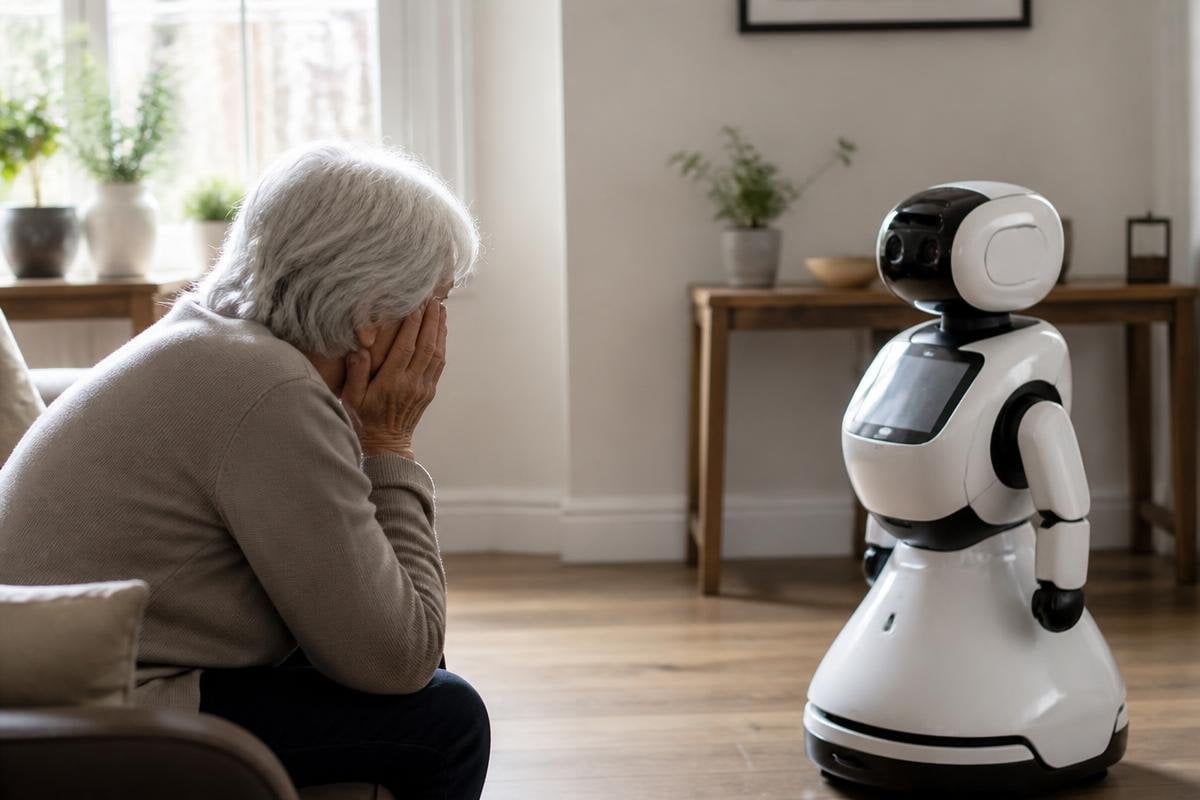
A robot that says “I’m worried about you” may only be reading a voice pattern and selecting a stored reply. The words can still change how a person acts, especially when the robot sits in a home, care facility, school, or customer service desk.
- Friendly language can hide a machine’s limits
- Trust grows faster than technical skill
- Clear disclosure should come before emotional design
What the robot is actually doing
Robots don’t need feelings to produce caring behavior. A system can detect speech, facial movement, body position, or changes in a person’s routine, then choose words and gestures that fit the moment.
That process can be useful. It may remind someone to take medicine, call for help after a fall, or guide a person through a task. The practical value comes from the reminder or action, not from any feeling inside the machine.
The ethical problem starts when the design makes the source of that behavior hard to see. “I missed you” suggests a private experience. “I’m here to help you check your schedule” describes a task. Those sentences create different expectations, even if the same speaker produces them.
The machine can copy the signs of concern. It can’t confirm that concern in the way a person can.
Trust can outrun the machine
People use social signals to decide who deserves confidence. A calm voice, a pause before answering, and a concerned expression can make a robot seem more aware than its software is.
That gap matters when the robot handles sensitive information. A person may tell it about pain, fear, money, family problems, or private routines because the robot sounds kind. The system may record, process, or send that information under rules the person has not read.
The risk grows for people who have fewer choices or less technical support. A child may treat the robot as a friend. A person with memory loss may accept its statements without checking them.
A worker may feel pressure to speak to a company system because no human option exists.
The robot’s voice is part of the interface. It should not become a hidden sales tool for access to personal data.
Where caring language can help
Emotional language has a place when it makes a task easier to understand or complete. “You sound tired. Would you like to pause?” can offer a useful break during a long exercise. The same line becomes risky if the robot has no clear basis for judging tiredness or if refusing the pause affects a person’s service.
Good design keeps the action visible. The robot should say what it detected, what it can do, and what it cannot decide. A person should also have a clear way to reach a human, review stored information, and stop the system from speaking in emotional terms.
Claims about a robot’s empathy need facts about the system behind its words. Robotics ethics reporting from Robot24.com can put those claims beside named machines and reported tests, so you can judge what the robot can do before disclosure sets the terms.
Disclosure should be plain. “I’m a robot. I don’t have feelings, but I can listen for signs of distress and contact a support worker” gives a person useful context before the conversation moves on.
A test for ethical design
A team can review a robot’s caring behavior with a short set of checks. The answers should be visible to the person using the system, not buried in technical documents.
- State the machine’s nature: Does it say that it has no feelings or personal needs?
- Name the signal: Can the person learn why the robot made a caring response?
- Limit the claim: Does the wording stay within what the sensors and software can support?
- Protect the choice: Can the person refuse emotional interaction without losing basic service?
- Offer human contact: Is a human route available when the situation exceeds the robot’s role?
- Check the data: Can the person see, delete, or restrict the information collected during the exchange?
I’d reject a robot that uses affection to gain access to private details or to block a human choice. A warm voice can support a task, but it shouldn’t disguise who holds the decision and where the data goes.
The next test is practical: can a person understand the robot’s limits before trusting it with a serious problem? If the answer is no, the design needs clearer words before it needs a more human face.
