


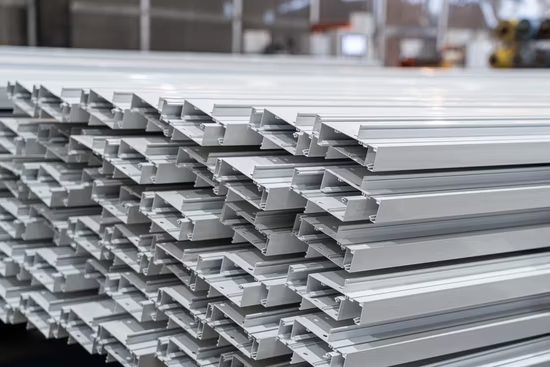
Aluminium has become one of the most widely used materials in modern construction and engineering due to its strength, versatility, and sustainability. In New Zealand, where building standards emphasize durability, seismic performance, and environmental responsibility, aluminium profiles are increasingly preferred across residential, commercial, and industrial projects. This article explores the Benefits of Using Aluminium Profiles in NZ Building and Engineering Applications and why they are shaping the future of construction in the region.
Introduction to Aluminium Profiles in New Zealand Construction
Aluminium profiles are extruded shapes made from aluminium alloy, designed for structural and architectural use. These profiles can be customized into various forms such as beams, frames, channels, and support systems. In New Zealand, they are commonly used in window systems, curtain walls, framing structures, transport systems, and engineering assemblies.
The demand for efficient, lightweight, and long-lasting building materials has made aluminium a key choice. As the construction sector evolves, the Benefits of Using Aluminium Profiles in NZ Building and Engineering Applications continue to attract attention from architects, engineers, and developers.
Lightweight Yet Strong Structural Performance
One of the most significant advantages of aluminium profiles is their excellent strength-to-weight ratio. Aluminium is much lighter than steel, yet it still provides sufficient strength for a wide range of structural applications.
In New Zealand’s earthquake-prone environment, reducing structural weight is a major advantage. Lighter building components can help reduce seismic loads, improving overall safety and performance during earthquakes.
This makes the Benefits of Using Aluminium Profiles in NZ Building and Engineering Applications particularly relevant for infrastructure projects where both durability and flexibility are essential.
Corrosion Resistance for Coastal and Harsh Environments
New Zealand’s geography includes extensive coastal regions where salt exposure can accelerate material degradation. Aluminium naturally forms a protective oxide layer that prevents rust and corrosion, making it ideal for such environments.
Unlike untreated steel, aluminium does not require heavy protective coatings to withstand weather exposure. This reduces long-term maintenance costs and improves service life in buildings, bridges, and marine engineering structures.
The corrosion resistance aspect is one of the key reasons the Benefits of Using Aluminium Profiles in NZ Building and Engineering Applications are widely recognized in coastal construction projects.
Sustainability and Environmental Advantages
Sustainability is a growing priority in New Zealand’s construction industry. Aluminium is 100% recyclable without losing its properties, making it one of the most environmentally friendly building materials available.
Recycling aluminium requires only a fraction of the energy needed to produce primary aluminium, significantly reducing carbon emissions. This aligns well with New Zealand’s commitment to sustainable development and green building practices.
As a result, the Benefits of Using Aluminium Profiles in NZ Building and Engineering Applications also extend to environmental performance and compliance with modern sustainability standards.
Design Flexibility and Aesthetic Appeal
Aluminium profiles offer exceptional design flexibility, allowing architects and engineers to create complex and modern structures. They can be easily extruded into custom shapes and finished with coatings such as anodizing or powder coating.
This enables a wide variety of architectural styles, from sleek commercial facades to minimalist residential designs. Aluminium’s clean appearance and adaptability make it a preferred material in contemporary architecture across New Zealand.
The Benefits of Using Aluminium Profiles in NZ Building and Engineering Applications are especially valuable in projects where both aesthetics and performance must be balanced.
Low Maintenance and Long-Term Cost Efficiency
Another important advantage of aluminium profiles is their low maintenance requirements. Unlike timber, aluminium does not warp, crack, or rot. It also requires minimal upkeep compared to steel or other traditional materials.
Over the lifespan of a building, this translates into significant cost savings. Reduced maintenance and replacement needs make aluminium a financially smart choice for both public infrastructure and private developments.
This long-term economic benefit is a core reason why the Benefits of Using Aluminium Profiles in NZ Building and Engineering Applications are increasingly recognized by project developers and asset managers.
High Precision for Engineering Applications
In engineering applications, precision is critical. Aluminium profiles can be manufactured with tight tolerances, ensuring consistent performance in mechanical and structural systems. This makes them ideal for use in machinery frames, transport systems, and modular construction components.
Their ease of fabrication also allows for faster assembly and reduced construction time, improving project efficiency across various sectors in New Zealand.
Conclusion
Aluminium profiles have become an essential material in modern construction and engineering due to their strength, durability, and sustainability. From seismic resilience to corrosion resistance and environmental benefits, they offer a wide range of advantages tailored to New Zealand’s unique building conditions.
Ultimately, the Benefits of Using Aluminium Profiles NZ Building and Engineering Applications demonstrate why this material continues to grow in popularity across both small-scale developments and large infrastructure projects. As the construction industry continues to evolve, aluminium profiles are likely to remain at the forefront of innovative, efficient, and sustainable building solutions.
