


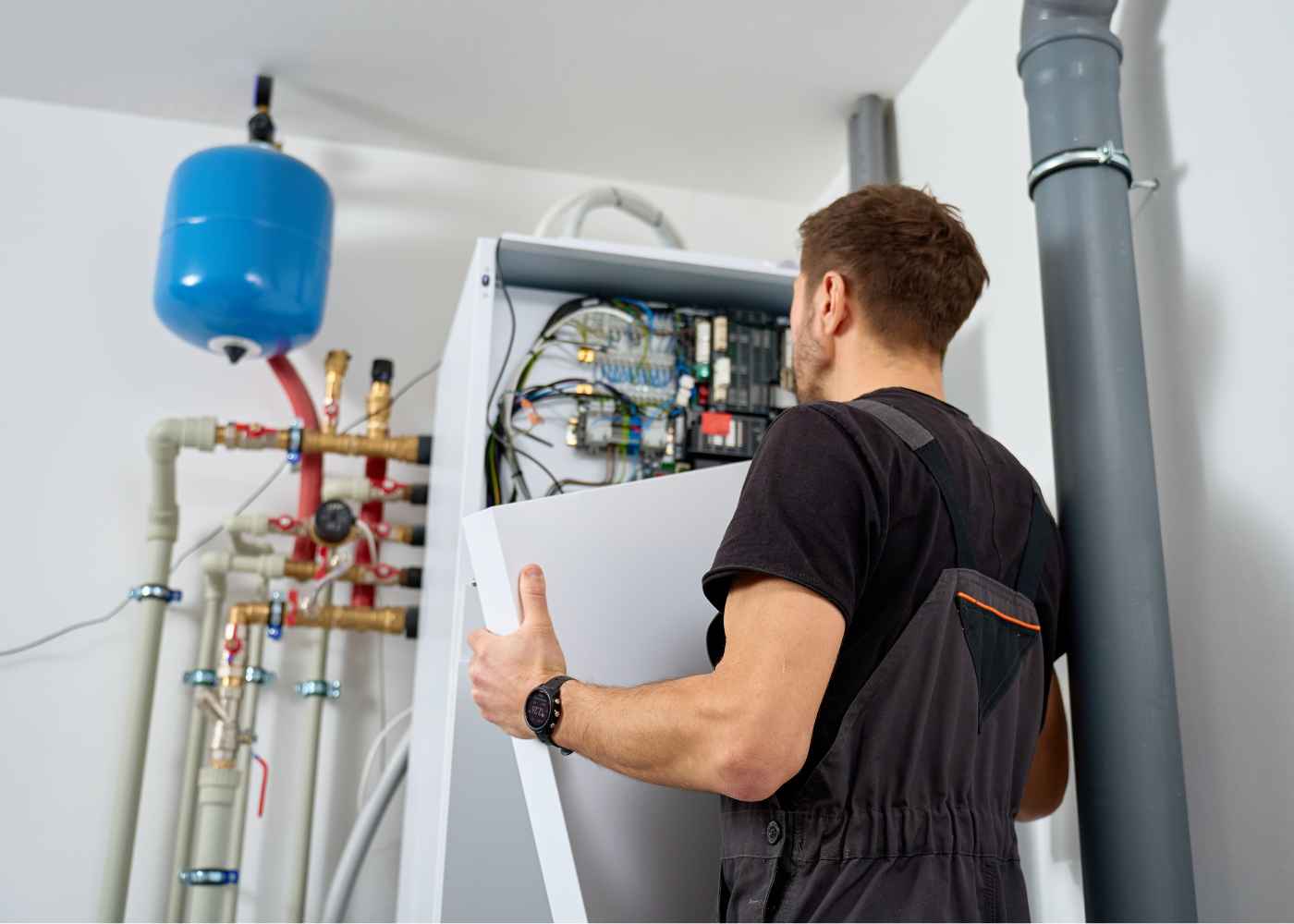
Replacing a furnace rarely arrives at a convenient moment. It tends to happen in the middle of winter, on short notice, with a price attached that nobody budgeted for.
It helps to reframe what is actually happening. A heating system is not a purchase that sits still and loses value. It is equipment that either costs you money every month or quietly saves it, and the difference between those outcomes shows up on every bill for the next decade and beyond.
Understanding Where the Money Actually Goes
In a Colorado home, heating is usually the largest line on the annual utility bill. Winters here start early and hold on, which means the system runs for a long stretch of the year.
Older equipment loses a meaningful share of the fuel it burns straight up the flue. That waste is invisible, which is precisely why it goes unaddressed for so long. A homeowner sees the bill and assumes it reflects the cost of staying warm rather than the cost of an inefficient machine.
Current high-efficiency equipment converts nearly all of the fuel it consumes into usable heat. The gap between an aging unit and a new one is not marginal, and it repeats every month of every heating season.
Sizing the System to the House
This is where an installation quietly succeeds or fails, and it has almost nothing to do with the brand on the cabinet.
A system that is too small will never keep up on the coldest nights. One that is too large is worse in its own way. It heats the house fast, shuts off, and repeats that cycle all day, which burns fuel needlessly and wears out components long before their time.
Correct sizing requires a real load calculation that accounts for square footage, insulation, window area, and how the house sits relative to sun and wind. Established local companies such as Steele Brothers Heating Inc., a family-owned business that has served the Denver area for decades, do that work before recommending equipment rather than after. Ductwork gets examined in the same visit, since a leaking duct system will undercut even the best furnace on the market.
Comparing a Furnace With a Heat Pump
The choice is no longer automatic. A high-efficiency gas furnace remains an excellent answer for Colorado winters, particularly in homes already served by a gas line and sound ductwork.
Heat pumps work on a different principle. Instead of burning fuel to create heat, they move existing heat from the outside air into the house, which takes far less energy to accomplish. Cold-climate models have improved enormously and now hold their output at temperatures that would have defeated earlier generations.
Plenty of Denver-area homeowners land on a hybrid setup, pairing a heat pump with a gas furnace so the house draws on whichever source is cheaper on a given day. That kind of solution only makes sense once someone has run the figures for your particular home.
Adding Controls That Do the Work for You
Efficiency is not only a question of equipment. It is also a question of not heating an empty house at full output.
A programmable or connected thermostat lets the system ease back while everyone is at work and bring the house up to temperature before anyone walks in. Remote access earns its keep in Colorado, where a cold snap can arrive while you are out of town and frozen pipes stop being hypothetical.
Zoned systems carry the idea further by heating the occupied parts of a house rather than all of it at once. In a larger home with a finished basement, that alone can move the monthly bill noticeably.
Counting the Payback Over Time
Savings arrive gradually, which makes them easy to underestimate. A smaller bill each month compounds across a heating season, and across the life of the equipment it tends to cover a substantial share of what the system cost.
There is more to the ledger than fuel. New equipment carries warranty coverage and does not generate the steady repair calls an aging furnace does. Rebates and financing options frequently soften the upfront figure, and a modern system is something buyers notice when a house eventually goes on the market.
Warmth is the obvious benefit. The quieter one is that your equipment finally stops working against you.
